Language teaching toolkit

Story Studio

Draw a story brief and practise how people clarify, translate or repair a misunderstanding in the language you’re learning.

AI-generated illustration

Your story cards

Keep any card you want to carry into the next draw.

Character

AI-generated

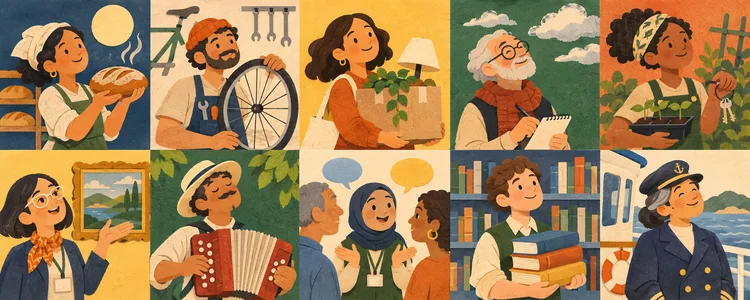
A night-shift baker

They’re usually the first to hear the town wake up.

Setting

AI-generated

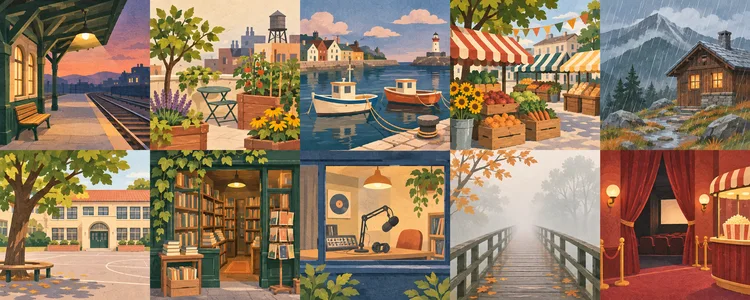
A closed train station

The lights are still on above one platform.

Object

AI-generated

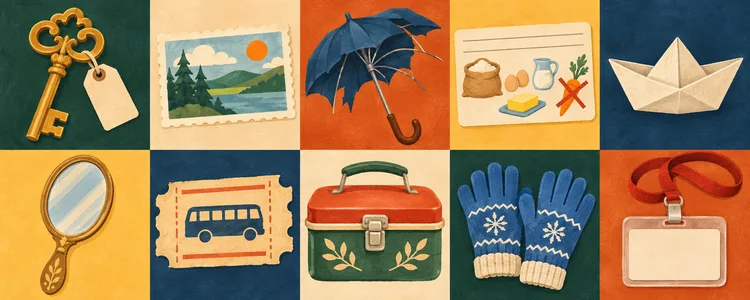
A brass key

A tiny paper tag hangs from it.

Communication challenge

AI-generated

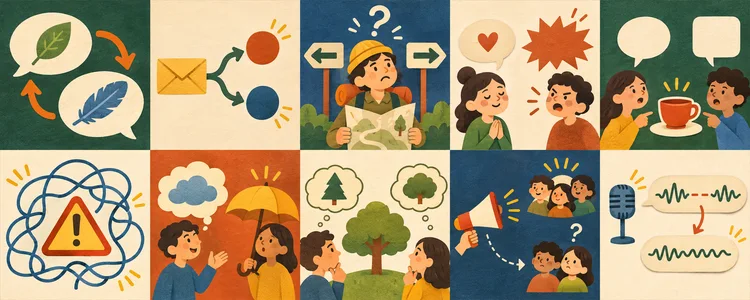
A translation changes the meaning

One word on the tag is translated two ways. Show how the characters check what it means.

Teacher guide

Use one draw for the whole class, or give each pair a different combination.

  1. Prepare. Choose a level, an activity and the target language. Give learners a minute to connect the cards.
  2. Create. Ask learners to show how someone responds to the communication challenge. Keep that card and redraw the others to practise the same skill in a new situation.
  3. Share. Ask listeners or readers to identify the line that clarified meaning. Discuss how it could change for a different listener.
  1. A night-shift baker
  2. They’re usually the first to hear the town wake up.
  1. A closed train station
  2. The lights are still on above one platform.
  1. A brass key
  2. A tiny paper tag hangs from it.
  1. A translation changes the meaning
  2. One word on the tag is translated two ways. Show how the characters check what it means.
  1. A bicycle mechanic
  2. A customer has left a strange note in the workshop.
  3. A new neighbour
  4. They have one afternoon to get to know the street.
  5. A retired weather reporter
  6. They still keep a record of the sky every morning.
  7. An apprentice gardener
  8. Today they have been given the keys to the greenhouse.
  9. A museum guide
  10. They are about to lead the last tour of the day.
  11. A street musician
  12. They have been playing the same tune all week.
  13. A volunteer translator
  14. They have promised to help two people understand each other.
  15. A library assistant
  16. They know exactly where everything should be.
  17. A ferry captain
  18. They recognise someone who usually takes a different route.
  1. A rooftop garden
  2. One light is still on in the building opposite.
  3. A quiet harbour
  4. The tide is starting to come in.
  5. A weekend market
  6. The stallholders are almost ready to go home.
  7. A mountain shelter
  8. Rain has erased the footprints outside.
  9. A school courtyard
  10. The usual sounds can be heard from an unexpected direction.
  11. A second-hand bookshop
  12. The owner has gone to look for a book in the back.
  13. A community radio station
  14. A live broadcast is about to begin.
  15. A footbridge in the fog
  16. The far end is just out of sight.
  17. A cinema foyer
  18. Only one film is listed for tonight.
  1. A postcard with no address
  2. The picture looks familiar, but nobody can place it.
  3. A broken umbrella
  4. Something has been stitched into the lining.
  5. A recipe card
  6. One ingredient has been crossed out twice.
  7. A paper boat
  8. A message is hidden in its folds.
  9. A pocket mirror
  10. Someone has scratched a small mark on the back.
  11. An old bus ticket
  12. It shows a route that no longer appears on the map.
  13. A sealed lunchbox
  14. There is a quiet rattle when it is moved.
  15. A pair of blue gloves
  16. One of them is inside out.
  17. A blank name badge
  18. There is a date written on the reverse.
  1. The message has two meanings
  2. Ask a question that helps the listener choose the intended meaning.
  3. The directions are unclear
  4. Restate them using a landmark and check that the listener can follow.
  5. A polite request sounds like an order
  6. Rephrase it for the same listener and show their response.
  7. Two people use different words for the same thing
  8. Have them work out that they are talking about the same object.
  9. A warning is hard to understand
  10. Explain the key information in simpler language.
  11. An expression is taken literally
  12. Explain the intended meaning with an example.
  13. Two witnesses remember different details
  14. Ask a neutral follow-up question and summarise what they agree on.
  15. An announcement reaches only part of the group
  16. Pass on the essential information in a way more people can understand.
  17. A speech-to-text tool mishears a name
  18. Show how someone checks the original message and corrects the error.
  1. Pair work · 45 seconds
  2. Tell a simple story
  3. Take turns telling a four-to-six-sentence story. Include one question a character asks when something is unclear.
  4. Try “What does that mean?” or “Can you say it again?”
  1. Pair work · 90 seconds
  2. Tell the story
  3. Use all four cards to tell a story. Include what someone says to check or clarify the meaning, then show what changes.
  4. Try “Do you mean …?” or “Let me put it another way.”
  1. Pair work · 2 minutes
  2. Adapt the message for two listeners
  3. Tell a story using all four cards. Your partner retells the exchange with a different listener in mind. Explain why the wording changes.
  4. Vary the register or amount of detail, then check what each listener understood.
  1. Individual work · 4–6 sentences
  2. Write a short sequence
  3. Write four to six short sentences using the cards. Include one question and a reply that makes something clearer.
  4. Try “Is this …?” and “Yes, it is” or “No, I mean …”
  1. Individual work · 80–100 words
  2. Write a mini story
  3. Use all four cards. Show the misunderstanding in a short exchange, then have a character check the meaning and respond.
  4. Use a follow-up question and a paraphrase to make the change clear.
  1. Individual work · 120–150 words
  2. Write two versions of one message
  3. Write a story using all four cards. Include two versions of an important message for different listeners and show how they respond.
  4. Use differences in register, detail or word choice to make both versions fit their listeners.

After creating your story, ask an approved AI tool for two ways to phrase one fictional line of dialogue. Leave out names and personal details.

Compare the suggestions with your own line. Which fits the listener and situation? Explain what you would keep or change.